
Sciatica Treatment in Calgary
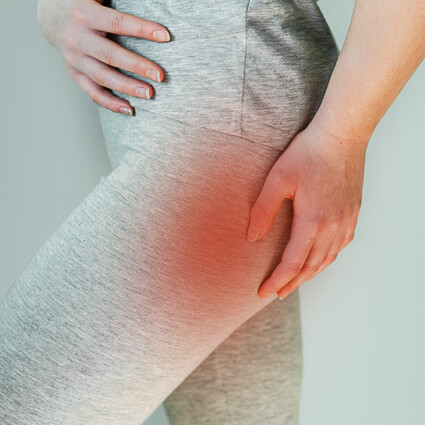 A sharp, shooting pain that runs from your lower back through your hip and down your leg can make sitting, standing, or lying down feel impossible to get comfortable in. Sciatica can take over your day, turning simple movements like bending to tie your shoes or climbing stairs into something you have to think twice about. With the right care, that nerve irritation can calm down and normal movement can return.
At Beacon Hill Chiropractic and Massage, we focus on identifying what’s irritating the sciatic nerve so treatment is directed at the source of your symptoms, not just the pain.
What’s Actually Happening Along the Sciatic Nerve
Sciatica isn’t a condition on its own. It’s a symptom caused by irritation or compression of the sciatic nerve, the longest nerve in your body, as it exits your lower spine. Pressure can come from a herniated disc, a narrowed spinal canal, or tight hip muscles pressing on the nerve’s path, so pain can show up anywhere along that route, not just where the compression starts.
What’s Putting Pressure on the Nerve
Several patterns commonly drive sciatic nerve irritation:
- A herniated or bulging disc pressing on a nerve root
- Spinal stenosis narrowing the space around the nerve
- Piriformis muscle tightness compressing the nerve in the hip
- Prolonged sitting, especially with a wallet in a back pocket
- Poor lifting mechanics or sudden twisting movements
- Pregnancy-related shifts in posture and pelvic alignment
The Pain Pattern That Sets Sciatica Apart
Sciatica typically feels like a sharp, burning, or electric pain that starts in the lower back or buttock and travels down one leg, sometimes reaching the foot. Numbness, tingling, or a pins and needles sensation often comes with it, and the leg can feel weak or heavy.
Symptoms are frequently worse with prolonged sitting, coughing, or sneezing, and may ease slightly when walking. Because only one side is usually affected, sciatica tends to feel distinctly different from general achy back pain.
Finding the Source, Then Calming the Nerve
Your chiropractor starts by identifying exactly where the compression is coming from, whether that’s a disc, a joint restriction, or tight musculature, rather than chasing the pain down your leg. Care may include spinal adjustments, targeted soft tissue work, and specific exercises to take pressure off the nerve.
Because sciatica often responds well to a combined approach, our integrated team can pair chiropractic care with massage therapy to address muscle tension contributing to the compression, along with guidance on movements to avoid while the nerve settles down.
As the underlying cause is addressed, many people experience improved movement and are able to return to work and exercise with greater comfort.
Don’t Let Sciatica Dictate Your Day
Relief is possible without surgery or long-term medication. Contact Beacon Hill Chiropractic and Massage today to book an appointment and start addressing the source of your nerve pain.
CONTACT US
